



Author’s Note: NEW COLLAB ALERT! I am super excited to announce my latest collaboration with Hot Cue Magazine. Here’s to spreading more peace, love, unity, and respect to the world.
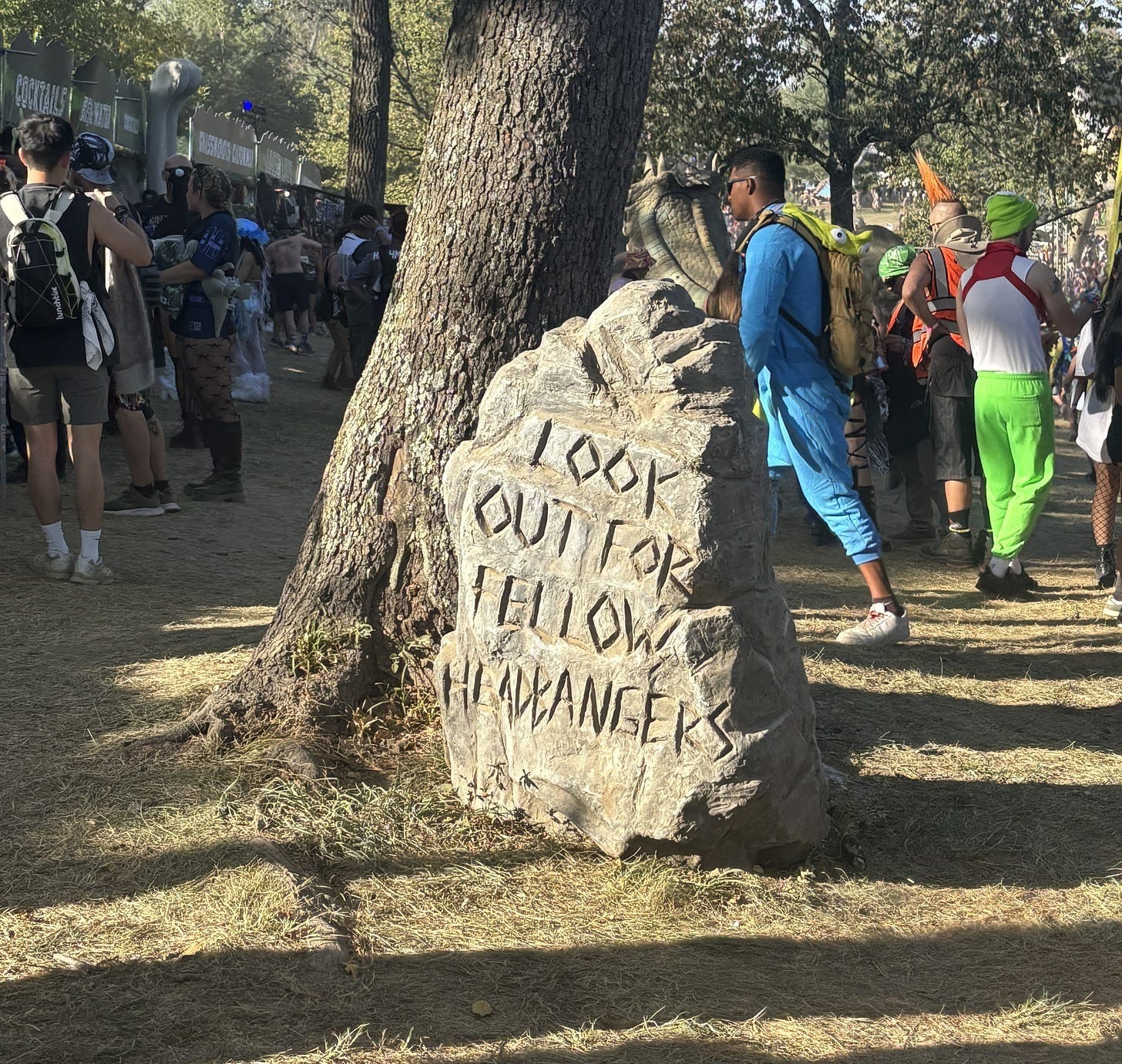
“Look Out for Fellow Headbangers,” proclaimed a stone engraving as I entered Lost Lands, one of the largest EDM festivals in America. I, along with other ravers, like to call this music festival presented by Excision the “Dubstep Disneyland”. This festival full of near-lifelike dinosaurs transports you not only to the Mesozoic Era, but also to the interestingly intense world of Bass music genres.
Whether new to the scene or a seasoned veteran, every raver has been exposed to this subgenre of Electronic Dance Music, particularly its most mainstream offering of Dubstep. And while Dubstep has been around for quite some time now, many are not truly aware of its unique history that actually began across the pond. I guess time travel to the past is a recurring theme here?
What Even is Dubstep?
Like many genres within the Electronic Dance Music scene, Dubstep has multiregional origins and a fascinating evolution from its roots to the songs we ascribe to the genre today. While many like myself were introduced to this world through YouTube and the enigma that is Skrillex, Dubstep was once a UK-based genre full of Caribbean Sound System1 cultural influence. Similar to most other EDM subgenres, Dubstep was born from Black identity and the need for community, swapping civil rights era of the US for the Caribbean Windrush generation2 of the UK. Dubstep, after all, was a product of its root word, tracing back over 50 years.
Dub music, a psychedelic genre created by manipulating 70s Reggae and Ska tracks, was pioneered by Jamaican-British King Tubby and popularized by Guyanese-British Mad Professor.3 As 90s Jamaican dancehall exploded in popularity, it became the latest influence in sound system culture and continued to change with time. From Jungle to UK Garage to Grime, the UK sound was shifting drastically, almost seamlessly shifting to Dubstep. After some research, Dubstep almost feels like a science experiment of sorts, blending a variety of different genres to create a unique sound all its own: a symphony full of altering rhythms and varying frequencies, and testing the limits of what makes great music.
Flash forward to the mid-2000s, to a time were Dubstep was defined by its “tearout” style4, characterized by a chaotically aggressive nature and robotic sound. This particular style is unique to the United States, as the UK sound was brought across the pond and opened up another world of Electronic Music to the masses. However, the 2010s was when dubstep really took off: songs like Rusko’s “Everyday”, Flux Pavillion’s “I Can’t Stop”, and Zeds Dead’s “Eyes on Fire” Remix defined the genre. These types of songs were distinctly identified as “brostep,” a somewhat derogatory term mainly used to describe the early American dubstep sound.
Brostep was the introductory genre for many modern dubstep fans, and listeners of this style may argue that, given its sonic characteristics, Dubstep has veered away from its dub origins; however, brostep isn’t the only kind of Dubstep, and I would argue that other subgenres demonstrate how Dubstep’s origins have come full circle.
For example, defined by its signature chaotic chopping technique and blatant Caribbean influence, Riddim (originally coined as Trench5) is one of those tertiary genres in Bass music that challenges the parameters of Dubstep’s capabilities even further (the spelling of “Riddim” is not a coincidence to me as someone who is 100% Caribbean). Riddims are beats/samples that artists use as a modern form of competitive sound system culture, harkening back to the genre’s roots. But to many Riddim DJs and listeners, that history is lost, lacking a cultural perspective on the naming of the genre.
Adding to Your Playlist
While we in the States may know Dubstep for its signature tearout sound and flair, many artists have explored the range of distorted sound that traditional instruments and newer technology have to offer. Most notable of these artists, of course, is the iconic LA-based Sonny Moore, more commonly known as Skrillex. A controversial figure in Dubstep6, his experimental sound blended the traditional Caribbean vibes classic to the genre with Rock & Roll influences and collaborations with Hip-Hop icons (see: Wild for the Night with A$AP Rocky). Love him or hate him, Skrillex opened the door for many who are prominent in the scene today.
As dubstep gained traction, the diversity of artistry expanded exponentially, with countless musical influences. Take artists like Subtronics with his “scratchy itchy brain riddim,” or future Rock & Roll Hall of Famer Sullivan King with his 80s hair band persona. Every Dubstep artist has a personality all their own. Many artists have also embraced Dubstep’s “wubby” sounding origin, such as LSDream and Mersiv, bringing back atmospheric vibes traditional to the genre.
As noted in my piece about Lost Lands, the Dubstep scene has arguably done a better job in promoting female and queer artists than some other genres. From Mexico’s Jessica Audiffred to the US’s own Layz, Level Up7, Zingara, and Alleycvt, there has been a growing number of women in the scene who easily throw down harder than their male counterparts.
Don’t believe me? Listen for yourself with my personal Dubstep playlist linked below and comment your thoughts.
Welcome to Brooklyn: The Basshead Way
Bringing it back to your local NYC FYP, documenting the bass scene here in New York has been incredible to witness. While more niche compared to, say, House and Techno, Bass music has grown exponentially in the last 5 years.
Notably, Meadow Street, located in East Williamsburg, Brooklyn, is home to spaces that have been active in the scene for years. The Brooklyn Monarch, The Meadows, and The Woodshop, neighboring venues situated in this dimly-lit industrial area, have solidified themselves as the go-to venues not only for mainstream Bass acts, but also for up-and-coming local Bass collectives like Riddim NYC8.
It’s also important to note how important Avant Gardner, as controversial as it is, is to the NYC Bass Scene. With its high production capabilities, artists like Subtronics and Excision have been able to execute grandiose set designs, including a plethora of lasers, animated visuals, and, of course, heavy bass. I jokingly call this venue the “main stage” of New York, with its large audience capacity reserved for some of the biggest names in their respective genres. While bass hotspots thrive in Brooklyn, it’s pretty rare to see Dubstep outside of the borough, with the one exception being Webster Hall in lower Manhattan on occasion (I once saw Boogie T there).
From the Function to the Festival: Embracing P.L.U.R.
One of the beauties of living in the 21st century is the number of niche Bass festivals catering to lovers of Dubstep, also known as bassheads. Most notable of these is Lost Lands. Hosted in Thornville, Ohio over the past 8 years, this festival has become a premium destination for Bass-loving enthusiasts. It does not stop there, though. Other camping-style music festivals like sister festival Bass Canyon, Waakan, Griz’s recent Valley of the Seven Stars, and even the giant Electric Forest have made names for themselves as niche festivals catering to this specific world of EDM.
Over the years, I have been to countless raves/festivals, and I can confidently say that Dubstep crowds both locally and at festivals have cultivated a more niche culture compared to other fans of other genres, rooted in the philosophies of 90s ravers. The best way to describe it is a blend of authentically comedic ridiculousness with the classic mantra of “P.L.U.R.” (Peace, Love, Unity, and Respect, for those new to the scene). Basshead culture has brought me a community of people from all over the country, trading not only kandi and trinkets, but kindness and memories along the way.
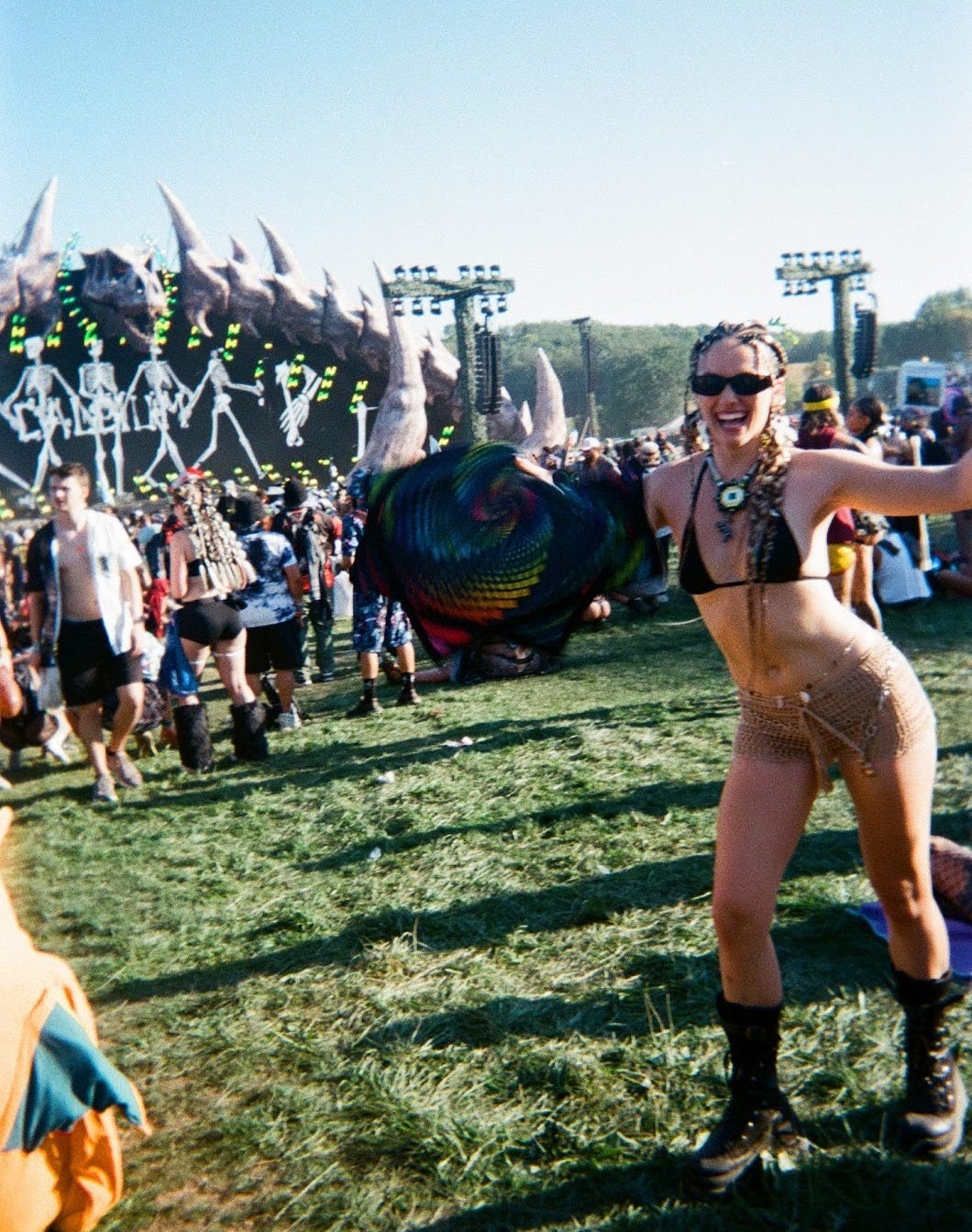
One of the most popular cultural practices within the Dubstep scene is “headbanging”, the unofficial dance of dubstep. There are two ideal places for any basshead during a show. One of them is “riding the rail,” gripping tightly to the front row or side barrier, headbanging as hard as you can to the sickest drop an artist will throw (see below for an example of my rave fam and I headbanging on the speaker barrier to Ray Volpe at this year’s Lost Lands). The other ideal location during a show is in the pit…the mosh pit that is. Pit culture, as I’ve examined in previous works, is not only normalized but encouraged, sometimes even turning into what some call “the wall of death”.
If bassheads are not headbanging or in the pit, you might find them in a crowd playing with a variety of flow toys. I absolutely love seeing flow artists at shows, giving incredible freestyles using everything from flow stars to fans, to dragon staffs, and even light-up whips. Giving flow performances is also a form of currency within the Bass community, as learning these toys takes hours and hours of practice, according to my friend Nemasis9 (check out her TikTok to see far she’s come in her flow star journey!).
Dubstep has come a long way since its inception, refusing to fit into any particular box. The same goes for its listeners. I have met bassheads from all walks of life: lawyers to personal trainers, to non-profit workers, etc., who you would never think were into this fascinating genre. Sometimes, I’d like to believe that Dubstep goes beyond the music itself, as it has created a world all its own with its countercultural nature.
As time goes on, I am even more fascinated to see where this world will take this genre next and how it will evolve over the next 10 years. How will we describe the next generation of Dubstep artists that continue to challenge the so-called limitations of music production? More importantly, how do we continue to retain our histories within the rave community?
In between pondering these questions around Dubstep’s origins and evolutions, you can find me on the rail, or in the all-girls mosh pit.
For more EDM genre history, subscribe to Hot Cue Magazine below:
Sound system culture was a club-like space born from Caribbean/Black segregation in the UK. The name is a reference to the actual speakers one would need at a party, often competing to have the loudest sound. SOURCE: DJ Mag
The Windrush generation was a mass-migration movement in post-WW2 Britain, inviting those from Caribbean colonies to help “rebuild.” Once crossing the pond, however, many of these people were racially oppressed and segregated, paving the way for the sound system culture we know today. SOURCE: BBC NEWS
If you want to learn more about sound system culture & Dub Music, watch here!
All My Homies Hate Skrillex, by Timbah.On.Toast on YouTube
What is Trench? by QB!K on YouTube
There are many who feel that his music is NOT dubstep at all, but something completely different, forever changing the context of the term “dubstep.” See source in footnote 4 for more details.
Fun Fact: Level Up is actually married to Subtronics IRL.
Riddim NYC also runs the Riddim Bus; a mobile venue dedicated to this tertiary genre.
Note: This is my friend’s chosen screen name in my work.
hot cue & oracle crossover >>>