



The experimental rave series PLAY ME TECHNO (PMT) has been building a sort of cult following — and naturally, Hot Cue needed to check it out.
On September 13th at 11PM, I headed over to Bushwick to attend PMT’s sixth event at a secret venue revealed on the day of. A smell of sawdust and sweat enveloped me as I entered the front of the house, next to a gigantic quarter ramp: I was in an indoor skate park, but no skaters in sight.
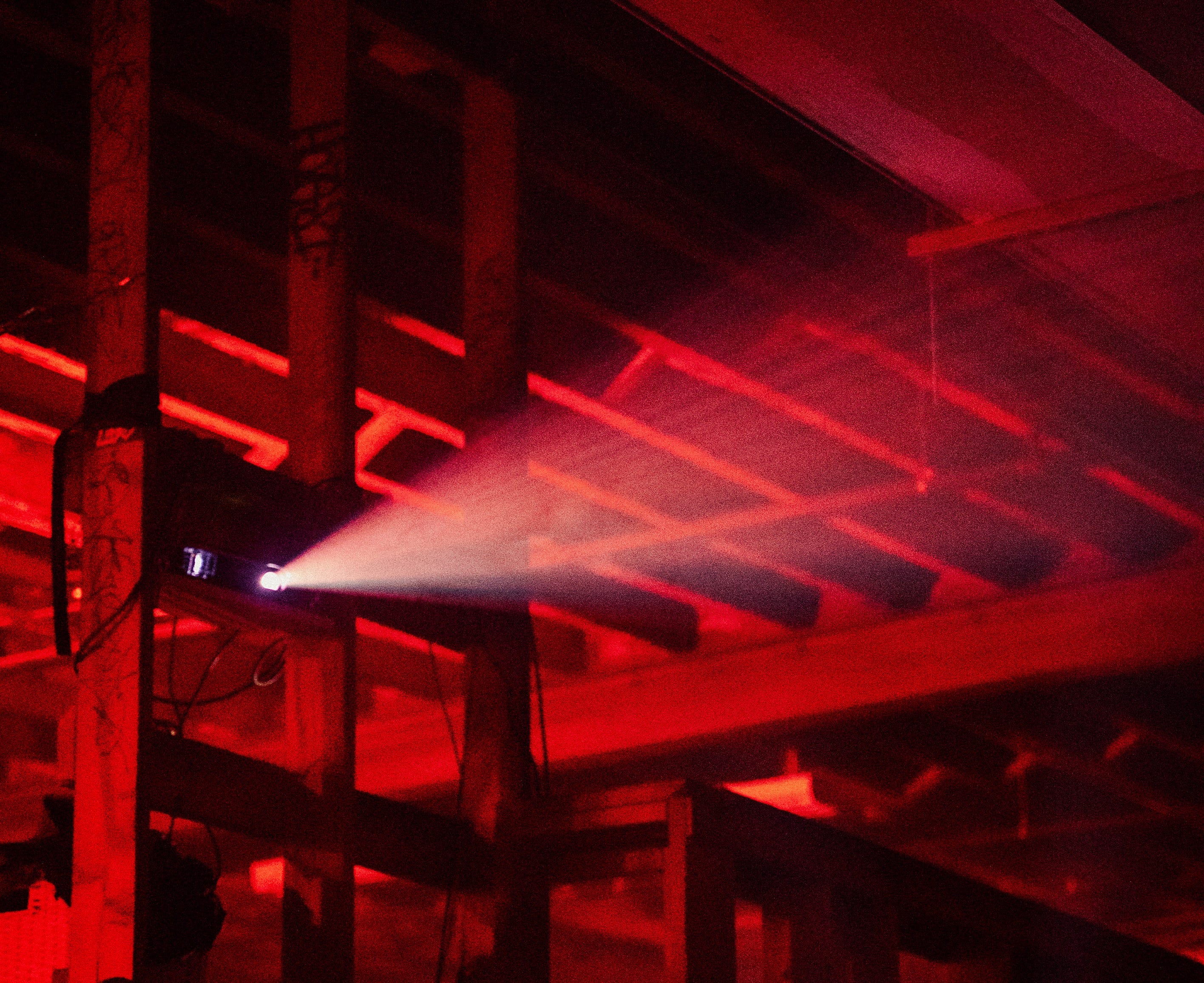
The venue was outfitted with gigantic speakers that permeated the pulsating rhythms of techno, to the point you could feel it in your body. Neon lights and versions of the PLAY ME TECHNO logo were projected on the main wall, while fog filled the room.
The dance floor, set up in the middle of a skating ramp, filled up quickly as the crowd trickled in over the first two hours, patiently waiting while warming up to the techno beats of the guest DJs.
At 1:30 AM, the lights dimmed and fog filled the dance floor as Lavy took over the decks. As Lavy raised the volume on the first song, two dancers, one with a long braid down to their thighs, climbed to the top of the skate ramp and began the first performance. The dance was a take on burlesque: the two performers contorted their spines in almost inhuman ways as their bodies responded in real time to Lavy’s music, who was slowly building the energy in the room.
For the next performance, five dancers clad in leather harnesses and fishnet stockings entered the dance floor as crowds parted to make way for them. A moment of silence, then the booming bass started creeping in, and the dancers’ bodies began to gyrate — in a matter of seconds, the stage transformed into a collective sensuality, sound waves and limbs flowing through the air.
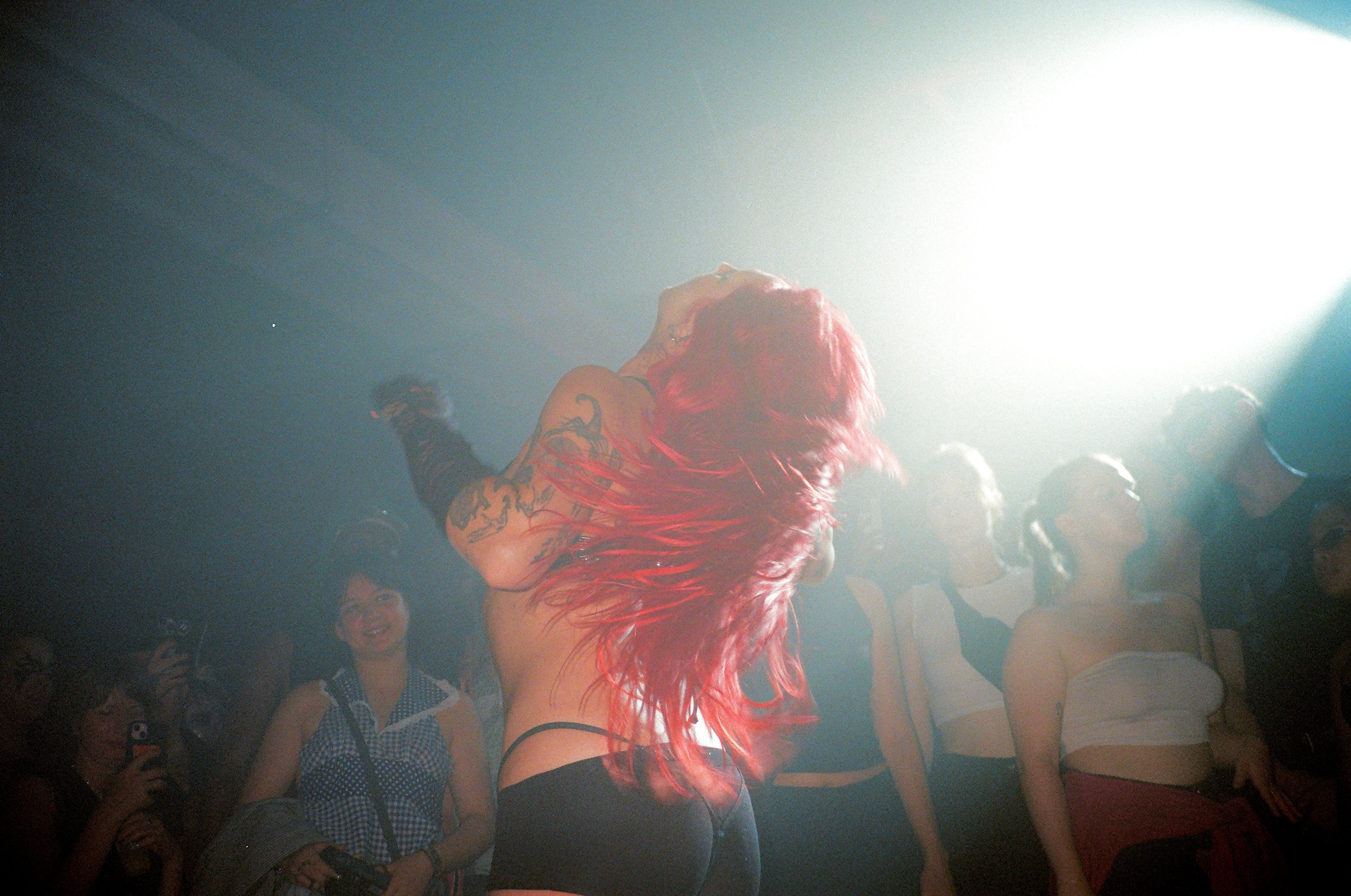
The crowd was immediately electrified: the audience circling the performers began cheering and joining in the gyrations themselves. Watching, I began to realize that the performance was all-encompassing: not only the sounds and movements on the stage, but also the energy enveloping the audience to encourage a group movement.
The performances continued until sunrise, with each performance building on the previous one in intensity, each choreography depicting a different concept of eroticism and intimacy.
I left the show feeling like a new person, and thankfully had a chance to speak with Lavy, the founder and lead organizer of PMT, after the event.
Lavy is a New York–based dancer who earned their BFA in Dance Choreography from Marymount College. Lavy is not a promoter and far from a newcomer to the scene – they’re a multidisciplinary artist who’s been honing their craft for over 14 years. Through speaking with them, I learned even more about how the notions of performance, theatre, culture, and community are very intentionally melded into the events they curate.
Q: Where did the idea for Play Me Techno (PMT) come from?
“I realized the proscenium stage wasn’t enough for me.”
Part of my senior seminar class in college to create a business or project to leave with. For me, that became starting a dance company, or what I now call an interdisciplinary performance collective. Dance was always a resource for me, but I realized I was more interested in creating entire worlds: environments that felt cinematic, immersive, places people could actually walk into. I wanted people not only to be moved by our physicality, but also by the environment around it.
That’s how I created VERBAL ANIMAL, my first company. Outside of college, I started building it with residencies and performance opportunities. But over time, I realized the proscenium stage wasn’t enough for me. I was craving something more decentralized, where audiences weren’t just sitting in seats, but instead moving through a space. That desire to create environments people could step into is what led to Play Me Techno.
A good friend of mine, Serena Wolman, now one of our resident choreographers, was there from the beginning. She had already been throwing her own nightlife event, Kiss My Face, which was a queer variety dance show with a party vibe. I wanted to move in a different direction: more abstract, more underground, where the audience was fully immersed in movement, performance, and environment. That became the seed for Play Me Techno. At first, the project was called Play Me Techno and Tell Me I’m Pretty. Now, we’ve shortened it to PLAY ME TECHNO.
At the same time, my co-founder Octi and I were both getting deeper into nightlife. We started DJing around the same time. For me, the merging of DJing, dance, and environmental design felt like the perfect amalgamation. Because it was coming from such an intentional space, it just felt right. So the first iteration of our team was myself, Serena, and Octi, bringing this vision into reality.
Q: Tell us about your first event. Where was it?
We did it at Red Pavilion. It’s more of a cabaret-style club. The space was small—maybe 75 to 100 people. We brought in our first lineup of performers, and while the venue lent itself to what we were trying to do in some ways, we quickly realized we wanted more control.
Being confined by a venue’s structure meant we couldn’t push ourselves artistically as far as we wanted. That event made it clear: we needed to create our own spaces.
Q: PMT has a cult following now. At what point did the series start gaining traction ?
Growth was slow but steady through the first year. About two shows ago, we sold out for the first time. The feedback we received then was overwhelming, people were really being moved by how immersive the event felt. That was at Rabbit Hole, on Evergreen Avenue, a venue we’d already used before.
By the second time there, we knew the space well, and the team had a strong grasp on how to shape and maintain it so people really felt transported. That resonance carried over. The most recent event was by far our largest: we doubled sales, sold out rapidly, and really felt the energy shift.
Q: How big was that last event?
Including guests, around 575 people. It was our largest ever: huge growth compared to where we started.


Q: What is the process behind planning a PMT event? How long does it typically take?
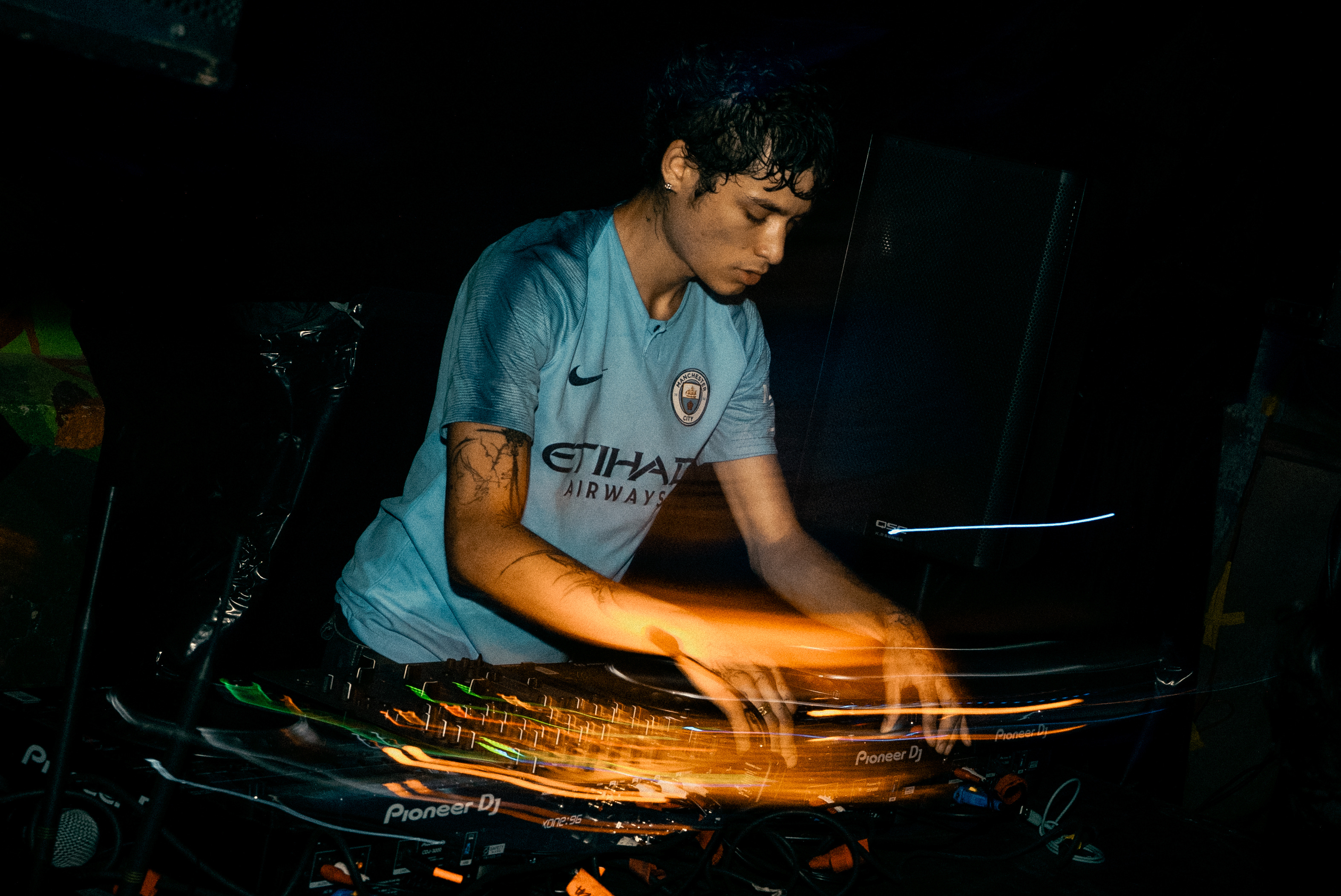
About two months. I do the majority of the curation and logistics: booking performers and DJs, planning the flow of the evening. I DJ a three-hour set from 1 to 4 AM, and each performance happens within that.
I collaborate closely with choreographers. Sometimes they choose tracks from a playlist I’m preparing for my set, sometimes they bring their own. Then we experiment together, sometimes at Pirate Studios: mixing different tracks, testing blends, and recording rough versions for them to choreograph to. For example, my work with our Resident Choreographer Akira Uchida, spans many weeks leading up to event. From meeting in person to discuss the intentionality of the work, to our studio time at Pirate, we inform each other to create a cohesive experience for ourselves and the people that join us at PMT.
But everything is still live-mixed at the event. That means the choreography and sound can shift in real time. The performers know it may change, so there’s a deep trust between us. I watch them, they tune into me. It’s a dynamic exchange. Sometimes what we rehearsed doesn’t land the same way in performance, so we adapt on the fly. That unpredictability has become part of the beauty.
Dancers love physical structures: rails, ramps, ledges –
things to push off, climb, or slide down.
Q: I went to your last PMT event that was held at a skate park, and the dancers interacted physically with the space in creative ways. How do you approach venues and space when it comes to planning events?
Usually we secure a space a couple months out. Sometimes choreographers get access beforehand, sometimes not. At our last event, some performers saw the space only on the day of. They had to imagine possibilities ahead of time and then adapt in real time, which was powerful in its own way.


The skate park venue we just used had been a dream of mine from the beginning. Dancers love physical structures: rails, ramps, ledges – things to push off, climb, or slide down. From the start, I knew I wanted to host a rave there, but it wasn’t feasible until recently. Getting to finally make that happen was a huge milestone.
My goal is to create a space where, through proximity to dancers, people feel permission to move in new ways.
Q: I also noticed that there were live lighting design and projection installations at the skate park event. How does lighting design come into play with the event planning process?
Our lighting and projection designers, Haley Morgan Miller and Josh Groth, have been with us since day one. Haley and Josh come from dance, so they understand performance from the inside. They transitioned into lighting and has been excited to experiment outside of traditional theater constraints. Josh operates the live lighting during the events, while Haley creates projection arcs: warping and twisting visuals, often using our logo, to play across the night.
They both bring new ideas every time, shaping mood and tone with fog, strobes, and projections.
For our most recent event, we introduced our first explicit theme: “the multiplicity of eroticism.” That guided not only the choreography, but also the lighting and projections. We wanted to expand the idea of eroticism beyond cliché archetypes—bondage, nudity, explicit sexuality—into subtle moments of intimacy and vulnerability. Sharing a dance, a touch, even something playful could be erotic. That throughline gave the event coherence, making each performance feel connected rather than separate.


Expansion is natural, but sacredness must remain.
Q: PMT expanded from less than 75 people from its first event to selling out venues in only 1 year. How do you feel about the event’s expansion from the more intimate queer community it started with to the broader mainstream audience it attracts today?
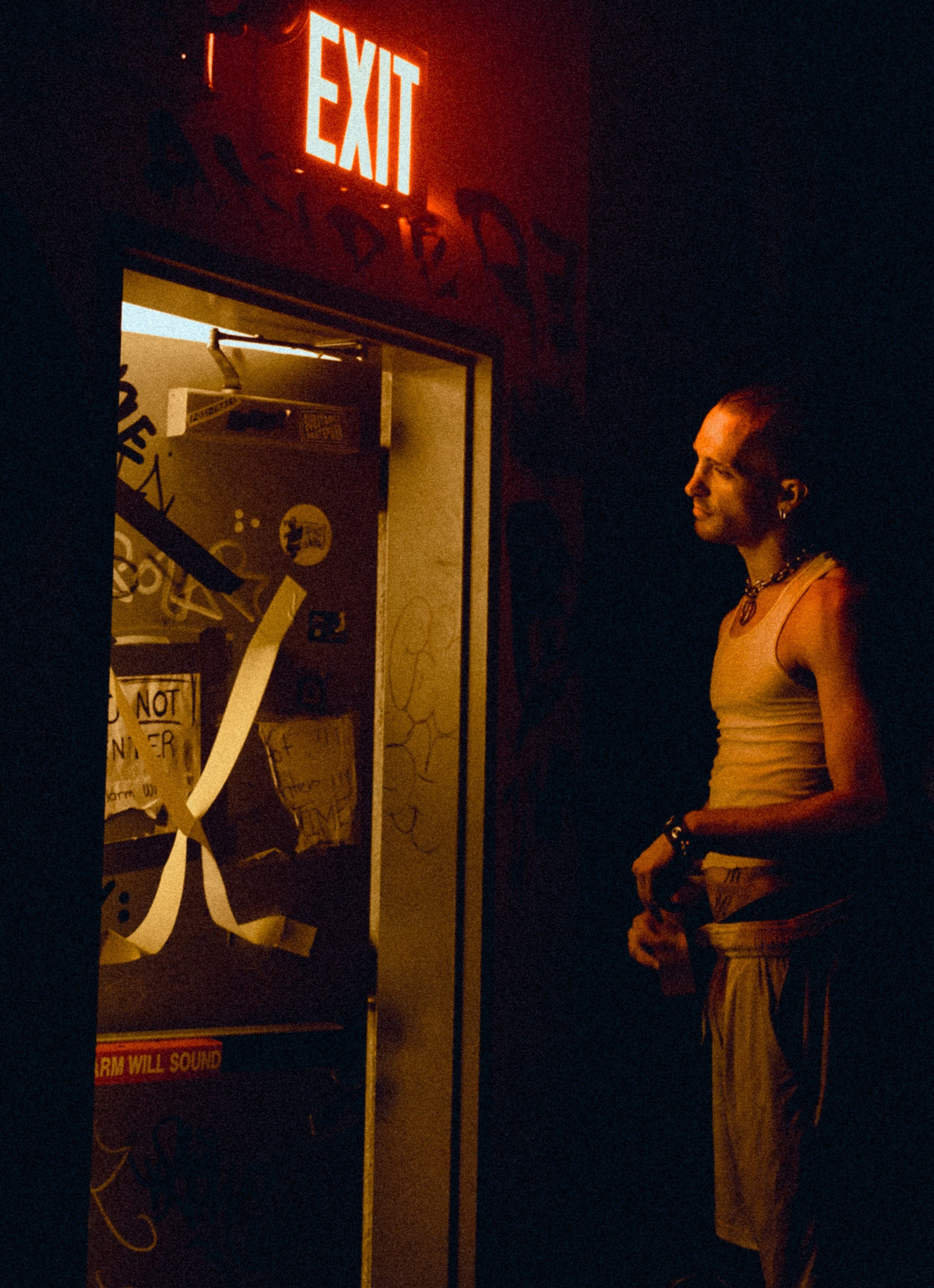
The events have been inherently queer from the beginning. All of us founders are queer, and it’s crucial to us that this remains a space by and for queer people. Accessibility is central: all trans-identifying people get in free.
As the events grow, more people outside the core queer community are attending, but our priority is maintaining the intentionality. We make it clear: when you enter, you’re stepping into a sanctuary. You’re expected to respect that this is primarily a queer space. Expansion is natural, but sacredness must remain.

That unpredictability makes the night more alive.
Q: How do you curate DJs and performers?
I prioritize queer, trans, and BIPOC artists, with a strong focus on femme representation as well. Genre-wise, I lean toward industrial techno, acid, trance, but I also love weaving in experimental textures.
I don’t over-direct DJs; I want them to bring their sound. That unpredictability makes the night more alive.
It’s about offering a playground for bodies,
a container for queerness, and a pathway to freedom.
Q: Where do you see PMT fitting into New York nightlife and culture more broadly?
For me, it’s about physical liberation. In queer culture, moving your body freely can feel intimidating or even unsafe. My goal is to create a space where, through proximity to dancers, people feel permission to move in new ways. When you see performers throwing themselves into movement unapologetically, it dissolves the aesthetic pressure to “look” a certain way. You realize: if they can move like that, so can I.
That sense of liberation, unlocking parts of your body you didn’t know were there, is what I hope Play Me Techno contributes to the New York scene, and to queer culture more broadly. It’s about offering a playground for bodies, a container for queerness, and a pathway to freedom.
Play Me Techno’s next event, Volume VII, will be held on November 22nd — follow their IG for tickets and to stay up to date on upcoming events.
And for more interviews and news about NYC’s electronic dance music scene, subscribe to Hot Cue Magazine here:
Such a good example of the best events continually moving the scene forward