



What I’m Listening to While Writing: SARA LANDRY @ DEF: THE BOILER
Hot Cue Mag Tip: Take a shot every time I say rave. I’ll say a prayer for your liver.
REMINISCING
At the end of the 1980s, acid house burned through the UK club scene. It escaped unlicensed. Underground dance rituals appeared in empty YMCAs, in fields, and on bridges. Believers, ravers, moved under the moon, guided by illegal radio stations and streetlight posters. “The Second Summer of Love” jumped the Atlantic to New York, and hasn’t let us rest since.
Non-conformists fled the club scene for the raves. Pamphlets promised temporary utopias. Newspapers warned of techno fanatical lunatics. Before the smartphone boom, it was members-only cards, rave books and a few souvenir photos. Early ravers just wanna go back to 1995.


On the front line against modern isolation, raving offers intentional community, in person. The rave of today has commercialized and specialized for the broad masses: run and rave, laundry and rave, goat yoga and boiler room set. The movement is a diceroll: more often than not, today’s ravers are obedient screenager crowds, preferring to stand and film rather than dance freely.
Raves have always been mutable by nature: A 1989 Ipswich rave drew 17,000 to an airline hanger. Sunset Raves in the San Francisco Bay began at dawn with kite-flying, listing The Sun as the headline performing act. Flash-forward to 2026, and you’re frantically refreshing Ticketmaster. Is the real rave dead?
WHAT MAKES A “REAL” RAVE?
It’s 2 am. You followed the address your friend’s friend gave you. A heavy door swings open, and technicolor light escapes into the night. Deafening rhythm pulls you in. Welcome home.


It could happen anywhere. How you got there might be the deciding factor. Call a number, get sent to a coffeeshop, a sauna, or a warehouse. The longer the scavenger hunt, the better the set.
Showing up equates to signing a pact with the party thrower: an alignment of intention. You’ve committed to celebrating music and to join an inclusive community. Is it peaceful, loving, unifying, and respectful? Is rave even a noun? Maybe it’s anything that keeps your feet going to a rhythm for hours on end. Maybe we need new lingo.
Clubbing, on the other hand, is a get-what-you-pay-for situation. Same each time, except for a new theme. Sort of the fast food to raving’s home-cooked meal. The club has all the shimmer and sheen of a good time, but it’s way less nourishing. Raving takes effort, but it’s better for the soul.
With the rave, intentionality is crucial. NYC clubs try to emulate this with a security vibe check when operating as a rave venue: “No Sexism, No Racism, No Phones on the Dancefloor.”
Raving drops boundaries, not just location pins and LSD. As electronic music comes for pop’s dominance, the scene is shifting in accordance with new faces. Who understands this transformation better than the operators? Let’s get to know our artists and our hosts.
HOSTS CLOCK IN
Rave hosts are unhinged. They’re the first to arrive and the last to leave, 12 hours after the start. They remember how you blew them off three years ago (it’s still not funny). Maybe they moved, across the country or the world, for your nightlife. They’re stone-cold and often, apparently, sober. They create the culture that crowds venues while up against dozens of competing events. We call these extraterrestrial creations: the party, the club, the function, the rave.
12 AM, Bushwick, New York
Not far from Maria Hernandez Park is a faraway world. Dancers climb pool tables, smoke clouds the first look through ten-foot glass doors. To The Moon, an NYC lifestyle brand (self-described as a mindset), is throwing a rager sure to piss off their landlord. A friend pushes me to introduce myself to Ian Orr, who is notoriously in a group chat with every nightlife VIP you’d ever want to know. His ever-present circle of followers make standing next to him a challenge. I wave my arms like the party ended an hour ago and I’m still here. He likes my homemade tie-dye, and I nab the interview slot: coffee at Crossroads Cafe, and a walking tour of Brooklyn’s best clubs. By sunlight, we meet the people you normally only cross paths with when you’ve stayed too long at the party: management, construction teams, and organizers.


To understand the 2020 rave scene in New York, picture longitude and latitude coordinates, glowstick paths, and the vibrations of the rhythmic techno ravers deep in Brooklyn and Queens. Maybe 90’s reminiscent; there were certainly no social media flyers. Internet commentators shot down “plague raves” as "disgusting”. Others pointed fingers at the government and its lack of support for the hospitality industry. Nonprofits like Nightlife United supported nightlife grants.
Rave culture is a longtime safe haven for those without social safety nets in their day-to-day life. Ian remembers how his first functions, thrown by Benny Soto and Danny Tenaglia, helped him learn to “Be Yourself,” the moniker of their series. With Soto, Ian even ran a promotion for Outernet, the space that would become today’s Superior Ingredients.


Ian, who now runs the event series Vigilante, learned true freedom through self-expression from Soto. "These parties were bold, expansive; they were what ultimately encouraged me to come out of the closet," When he faced homelessness, Ian’s rave connections took him in as family, guided by a central mission of fostering a supportive environment.
“It’s not going to the party and then going back home,” Ian says, “Outside was my home. For some people it’s their night out; for me it’s my life. That is never going to go away."
Today, there is still the essence of intentionality. The scene is never dying, but expanding as followers of the dance movement diversify. How organizers create is also ever-changing.
THE SOBER SHIFT
4 AM, Cape Town, South Africa
AJ crests Lion’s Head Mountain. 2,000 feet above sea level, the rising sun lights up Cape Town. An hour before this, AJ had left his group’s fourth venue of the night to reach the trailhead in time. His secret?
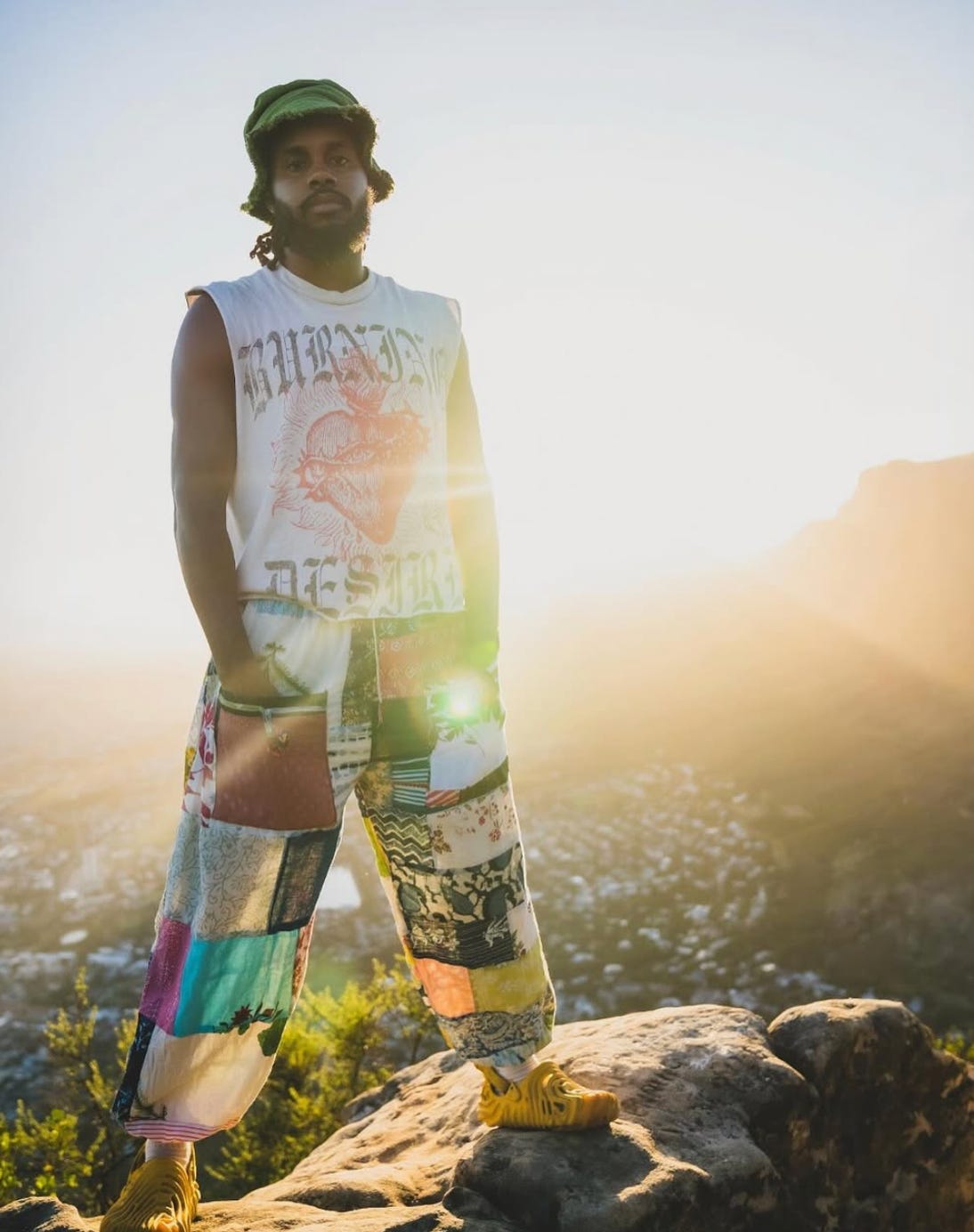
“Six years,” AJ deadpans. Six years of sobriety, still counting.
We’re back in Brooklyn, same sun, new city. Nyla House is quiet this morning, a rarity for the double-life coffee shop and social club. For AJ, same crazy schedule. He’s fresh from a D.C. party the prior night, with time to run the Brooklyn Bridge before we met up. “Your reality is what you focus on,” he says. “Center yourself on what makes you your best, and you’ll always be it.”
Someone must have sent a memo for everyone to start a sober journey. Could have been the Surgeon General’s Warning, or just throwing up in the subway one too many times. I’ll go out for an hour to join some friends and come home three seltzers deep and 80 bucks poorer.
Someone must have sent a memo for everyone to start a sober journey. AJ knows why it sticks once they do: "A lot of people fear they'll lose their social life, but in reality, it's the opposite." He references a recent college grad he knows who was thinking of drinking less if not for her FOMO. Shots with friends, sharing one with the bartender or a stranger you've been eyeing all night— it's a ritual, a ceremony. But once she cut back, she was going out more, staying out longer. "My interactions are substantial because I never tire out,” AJ emphasizes, “I remember all the conversations and moments. It makes me better at what I do."
As the clever mind behind No Type, a series that started as friends-only ragers, and now operates house party-adjacent events all across the East Coast, AJ has mastered dance-centered socializing. His vision is focused, his community purposeful and open: just how we imagine the best raves. Instead of acid house, expect Trap, Amapiano, Jersey Club, Afrobeats, and your clothes sticking to your skin. It’s a “music experience:” sounds courtesy of DJs Mohogany, Moochie, El Fennec, kenDollaz, all run by an abstinent wild child.
The musicians, too, are indulging differently.
ARTISTS LOCK IN
Young celebrities just aren’t stumbling out of clubs like they used to. The drunk celebrity Reddit collections have been replaced by Cosmo’s lists of forty A-list sober stars. Where are the paparazzi shots of bands coming ass-first out of limos? In the smartphone era, there are more cameras in clubs than exits, but we see less of the real party.
“A lot of artists don’t want to party all the time,” Miguel, artist and innovator of his own music label Tamed, explains. “They just want to make their art, maybe play for a small crowd, and still have a career. I want to give them that.” He is a scientist of a great scene. Miguel traverses America with a series Tamed Global: a brand for the audiophiles of Miami, Charlotte, Columbus, and NYC. It heralds the best sound systems, giving you underground sounds you never knew you needed.
Crucially, his series supports amazing artists, but no DJ worship allowed. I’m all for this ethos — too often, I’m at a rave better described as a concert. Crowds adore the artists but forget to be free. Dance, connect, have moments! Instead of each other, our shoulders seem to surrender our sole attention to the setlist.
“I would never play on stage more than that high,” Miguel floats his hand a foot above the ground. “Well, maybe that high.” He moves it a foot higher. Equality is center stage at Tamed events, modeling the hierarchy-flattening of early rave culture. “Everyone’s human. When you come to a Tamed event, everyone is treated equal. Everyone leaves their worries at the door. I want our events to feel like an escape mechanism from all the chaos.”
Miguel doesn’t drink much (hard to justify ruining his meal prep with ten beers), and is part of a scene-wide shift away from liquor overloading. I’ve heard more of the same from other artists. Viiq, trailing young prodigies behind her as a music teacher by day and breaking up all-male DJ lineups by night, prefers Pilates to PBRs. When I meet her on the Fourth of July in Sunset Park, she’s nervous enough to puke. Who needs liquor when you have a stage fright adrenaline? Troxell, a jack-of-all-trades producer and performer (profiled in Hot Cue Mag's first DJ piece), said, “I’m not really a drinker, I’m focused on the energy of the room.”


This sober shift isn’t rebellion, really; it’s a fixation on creating, and seeking more balanced lives. The stereotype of party-music-makers who want a rock-n-roll tour experience is overblown, and sometimes, not fully their choice. Miguel references artists like Avicii, who suffered pressure from their teams to tour against their health. We don’t accept the mantra anymore of strong art requiring a strong drink. Artists are less Guns N’ Roses and more Laidback Luke.
For a real raver, the experience isn’t about getting fucked up. Like the 90s, we “Just Say Know.” But it’s gone beyond sobriety . The expansion of raves, which are already often described as a physical approach to spirituality (check under r/aves, “Is raving a spiritual experience for anyone else?”), is crossing deep into Big Wellness territory.
What’s a Wellness Rave? Can a “real rave” serve hot tea?
8 PM, Williamsburg, New York
You’re high-fiving the most fit people you’ve ever met. You’re not allowed to wear shoes. In fact, the less clothing, the better. Welcome to Othership. Half the fun will be exploring the sleek, carved wood, intimate orange-lit interior.
“New Yorkers, on average, have less than one close friend.”
If Bruno Mars designed a spaceship, it would look a lot like this, I think. Herbal tea on tap. Sweaty chanting followed by a swim in Antarctic temperatures. Both promise to boost metabolism, but in a body-positive way.
Othership is an immersive sauna that dabbles in the rave, including functions hosted by Daybreaker, a global dance and wellness movement. At their outdoor or warehouse venues, there are fewer cold plunges and sweet scents. Trade those for “grounding workouts,” music blasting, and a massive open setting. Keep the meditation, add strobes. It has breathwork, it has dancing, but it might be wrong to say it’s about the music.
Wellness raves let attendees start their day bumping. All the bump-taking seems to be edited out of the promo videos. There's no drinking in spaces "made sacred by movement," but don't expect a sober crowd at the 10 am "Have Fun, Be Nice" workout and boiler room set. Now, everyone is Brooklyn sober — doing anything they want, as long as they’re not paying for it.
“Our goal is addressing the loneliness epidemic,” Othership manager Muriel tells me. She’s headlining sober rave culture. Muriel has a personal journey with a universal vision. It is very much in line with the intentionality of raves, but it looks a little different. I don’t believe her at first when she says New Yorkers are low on friends –in a city of over 8 million, surely most people have their people. Yet personnel at Othership released a poll: New Yorkers, on average, have less than one close friend.
Health-conscious clubbing is not everyone’s cup of tea. Australian lifestyle mag Mamamia railed against over-emphasis on wellness, stressing that it steals opportunities for self-expansion: “It’s the ‘low-pressure atmosphere’ I take issue with. Because here's the thing: high-pressure social situations are the makers of us. It's in discomfort that we learn and grow. Maybe it's because [Gen Z is] the first generation raised on constant stimulation, that embracing 'boring' has become an act of rebellion.”
It’s been called a “capitalist psy-op” and a “simulation of real life.” Wellness raves are addressing loneliness, but maybe not the root of it.
The wellness of any given raver may be uncertain, but the rave itself is forever in good health.
THE UNDERGROUND ISN’T DEAD, IT’S EVOLVED


The beat doesn’t stop at your ears; it’s in your bones. You’re one with the strobes, spinning along their loom. They connect us, a trap of fluorescent harmony you never want to escape.
Raves are chaos. They serve a primal need, physical freedom, and produce progressive ideals. Some are conducted by die-hard sound system purists, some by visionaries of movement. The underground isn’t dead, it’s evolved. Ian’s coordinate-address parties still happen. Miguel brings underground ethos to legal venues. The essence survives even when the form changes.
AJ says, “A party is a living thing.” Feed it with what keeps it alive: community and intention. Remember to “Just Say Know.” Know what you’re there for. Know why you showed up. Know the difference between enhancing experience and replacing it.
It’s not the warehouse, ecstasy, or DJ you need proof was there. It’s the pact. The liberty to move without judgment. The community that forms when people show up for each other and sound.
You decide.